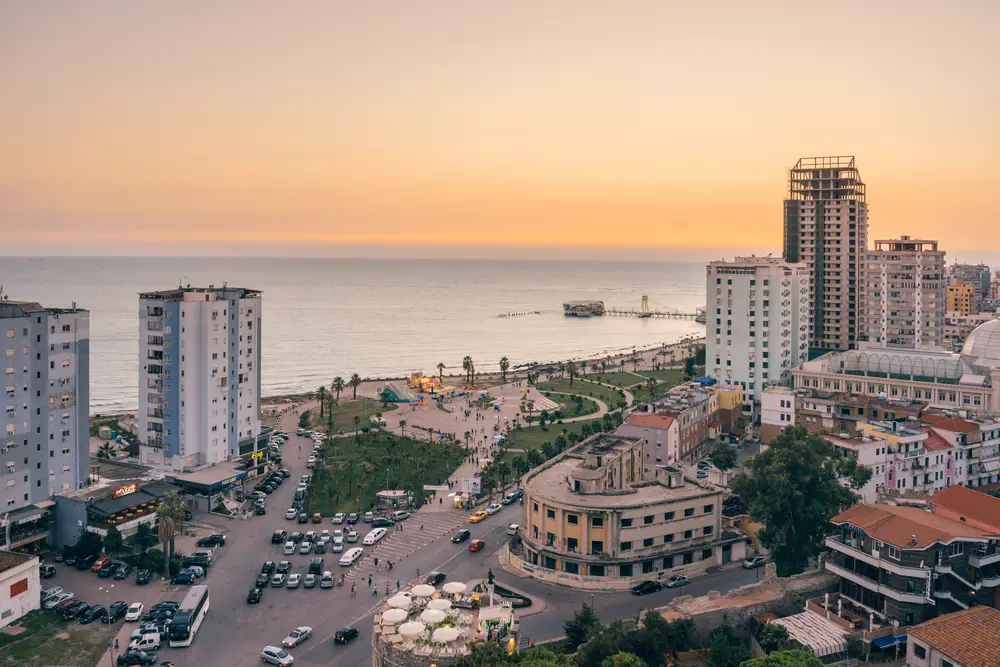
🇦🇱 Discover Albania – Land, History, and Identity
Welcome to this page dedicated to understanding Albania’s geography, history, and politics — three key elements that shape the country’s unique identity. Here, you can explore Albania’s breathtaking natural landscapes, trace its long and fascinating journey from ancient civilizations to modern times, and learn how its political system functions today.
Whether you’re a traveler, a student, or simply curious about this beautiful Balkan nation, this section offers a complete view of how Albania’s land, past, and people come together to create a country full of life, culture, and resilience.
🇦🇱 Geography of Albania
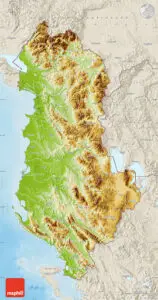
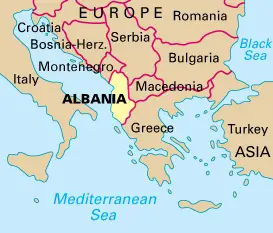
Albania is a small yet incredibly diverse country located in Southeastern Europe, on the Balkan Peninsula. It is bordered by Montenegro to the northwest, Kosovo to the northeast, North Macedonia to the east, and Greece to the south, while its western coast meets the Adriatic and Ionian Seas. Despite its modest size, Albania offers a stunning variety of landscapes — from high mountain peaks and green valleys to beautiful sandy beaches and crystal-clear waters.
Around 70% of Albania is covered by mountains, including the Albanian Alps in the north and the Pindus range in the south. The country’s highest peak is Mount Korab, standing at 2,764 meters. In contrast, the coastline stretches for about 476 kilometers, offering some of the most unspoiled beaches in the Mediterranean, such as those found in Ksamil, Dhermi, and Jale.
The country’s major rivers include the Drin, Vjosa, and Shkumbin, while Lake Shkodra (shared with Montenegro) is the largest lake in the Balkans. The Prespa and Ohrid Lakes in the southeast are among the oldest and deepest in Europe.
Albania enjoys a Mediterranean climate along the coast, with hot summers and mild winters, while the inland and mountain areas have a more continental climate, featuring colder winters and fresh summers. This combination of climates supports diverse flora and fauna, making the country a paradise for nature lovers, hikers, and eco-tourists.
🏛️ History of Albania
Albania’s history is a fascinating journey through time — a story of resilience, independence, and rebirth. Its roots trace back to the Illyrians, an ancient Indo-European people who inhabited the western Balkans as early as 2000 BC. Over the centuries, the region became part of the Roman Empire, followed by the Byzantine Empire, leaving behind a rich legacy of architecture, language, and traditions.
During the Middle Ages, Albania experienced a series of invasions and cultural influences from various powers, including the Venetians and Serbs. Yet, one figure stands above all in Albanian history — Gjergj Kastrioti Skanderbeg, the national hero who led a powerful resistance against the Ottoman Empire in the 15th century. For over two decades, he defended Albanian lands and became a symbol of unity and European resistance against Ottoman expansion.
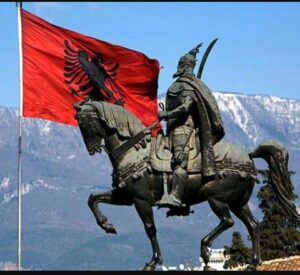
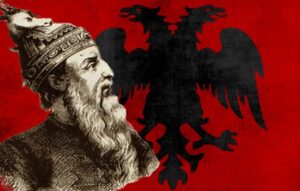
After Skanderbeg’s death, Albania fell under Ottoman rule for more than 400 years. Despite this long period, Albanians preserved their language, identity, and traditions, often expressed through music, folklore, and strong family ties.
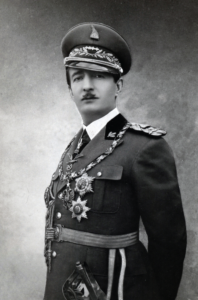
By the early 20th century, as the Ottoman Empire weakened, Albania declared its independence on November 28, 1912, in the city of Vlora. However, the following decades brought instability — two World Wars, border conflicts, and short-lived monarchies, including the reign of King Zog I.
After World War II, Albania came under communist rule led by Enver Hoxha, who governed the country from 1944 until his death in 1985. This period was one of the most isolated and controlled regimes in the world.
Hoxha’s government broke ties first with Yugoslavia, then with the Soviet Union, and later even with China, leaving Albania in almost complete isolation. The communist regime banned religion entirely, declaring Albania the world’s first atheist state, and imposed strict censorship, central planning, and collective farming. Thousands of bunkers were built across the country as symbols of paranoia and defense.
Life under communism was extremely difficult. People faced shortages of food and goods, limited freedom, and severe punishment for political dissent. Yet, this period also brought widespread literacy, basic education for all, and industrial development — achievements that laid some foundations for the country’s later transformation.
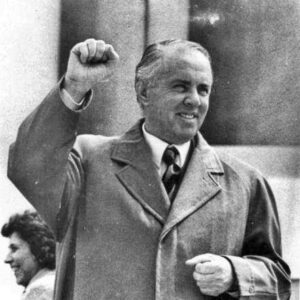
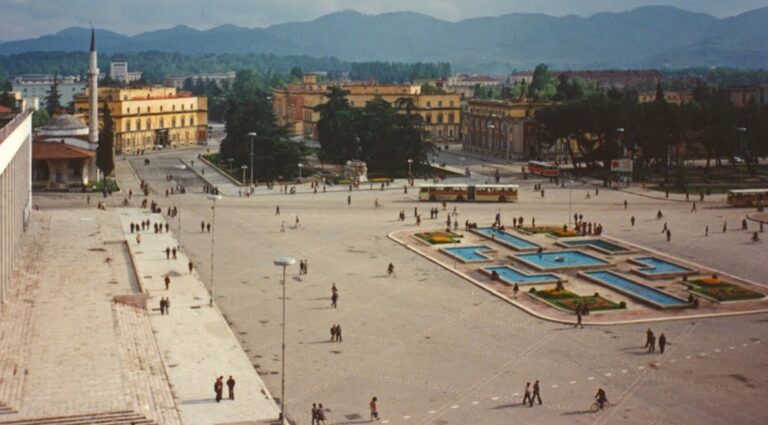
In 1991, with the fall of communism across Eastern Europe, Albania finally opened its borders and began its path toward democracy and a free-market economy. The transition was challenging, marked by political unrest and economic struggles, but the country gradually rebuilt itself with hope and ambition.
Today, Albania is a member of NATO, a candidate for European Union membership, and one of the most promising destinations in Southeast Europe. Its modern identity reflects both the lessons of its past and the energy of a nation moving confidently toward the future.
🏛️ Politics of Albania
Albania is a parliamentary republic located in Southeastern Europe, operating under a democratic and multi-party system. The modern Albanian state is based on the Constitution adopted in 1998, which guarantees the separation of powers between the executive, legislative, and judicial branches.
The President of the Republic serves as the Head of State and is elected by the Parliament for a five-year term. The President’s role is mostly ceremonial, focusing on representing national unity and overseeing the country’s constitutional order.
The Prime Minister, on the other hand, is the Head of Government and holds the main executive power, leading the Council of Ministers and directing national policy. The Prime Minister is usually the leader of the party or coalition that wins the majority of seats in Parliament.
The Parliament of Albania (Kuvendi i Shqipërisë) is unicameral and composed of 140 members, elected every four years. It passes laws, approves the government’s program, and monitors its activities. Albania’s judiciary is independent, with a Constitutional Court and a High Court ensuring that laws and government actions comply with the Constitution.
Since the early 1990s, after the fall of communism, Albania has made significant progress in strengthening democracy, human rights, and the rule of law. The country has undergone major political and economic reforms, aiming to modernize institutions and align them with European standards.
Albania became a member of NATO in 2009 and has been an official candidate for European Union membership since 2014. Its foreign policy is strongly focused on European integration, regional cooperation, and maintaining friendly relations with its neighbors and international partners.
Today, Albania’s political landscape is dominated by two main parties — the Socialist Party (Partia Socialiste) and the Democratic Party (Partia Demokratike) — which have alternated in power since the 1990s. Despite political challenges and ongoing reforms, Albania continues to move forward toward a more transparent, accountable, and democratic governance system.